Latest Conferences
April 2026
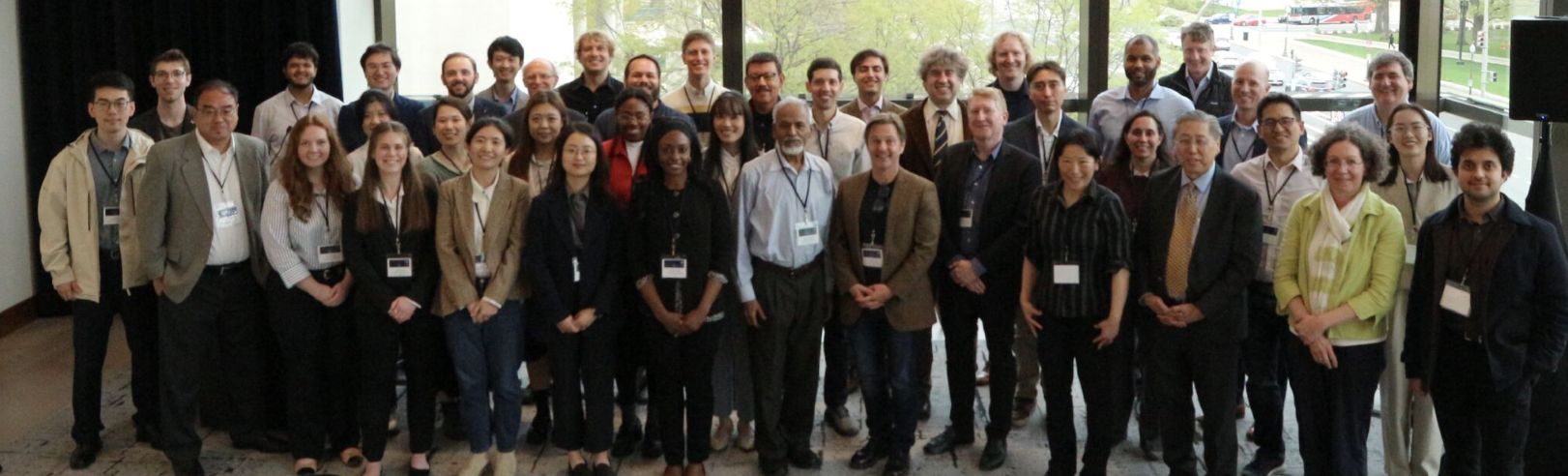
About two weeks ago, I was at an NSF meeting of the Trailblazer awardees—twelve in all, six each from 2024 and 2025. (My postdoc, Sachin Bharadwaj, who accompanied me, is at the extreme right in the photograph on the right.) The meeting was a valuable opportunity to learn about a range of inventive ideas. One remark, made in a thoughtful presentation, has stayed with me. It suggested that differential equations and calculus may no longer be central—that data, or rather machines trained on data, might suffice for what we need to know. I paraphrase, but the sentiment is not new; versions of it have surfaced repeatedly in recent years. I was trained in an intellectual tradition that drew a clear distinction between data and understanding. Data are indispensable but not the endpoint; they are a means toward comprehension, which remains the true objective. I do not dismiss the data-centric perspective. In some domains, it has achieved what classical approaches have not. Yet, in the realm of physical phenomena, if data are not absorbed into a coherent framework, there is the risk of adding to an already familiar predicament: an abundance of information paired with only a partial grasp of its meaning. I would be interested in your comments.